Choosing workflow automation solutions often means picking a generic tool that cannot address AI product scaling or complex integration needs. Many workflow automation platforms either exclude direct access to senior technical leadership or gate true customization behind complex contracts. This comparison covers pricing, ownership models, and technical scope across five consulting agencies so founders, CTOs, and product leaders can align an agency to their product roadmap and in-house capabilities.
Table of Contents
Swarnendu De
At a Glance
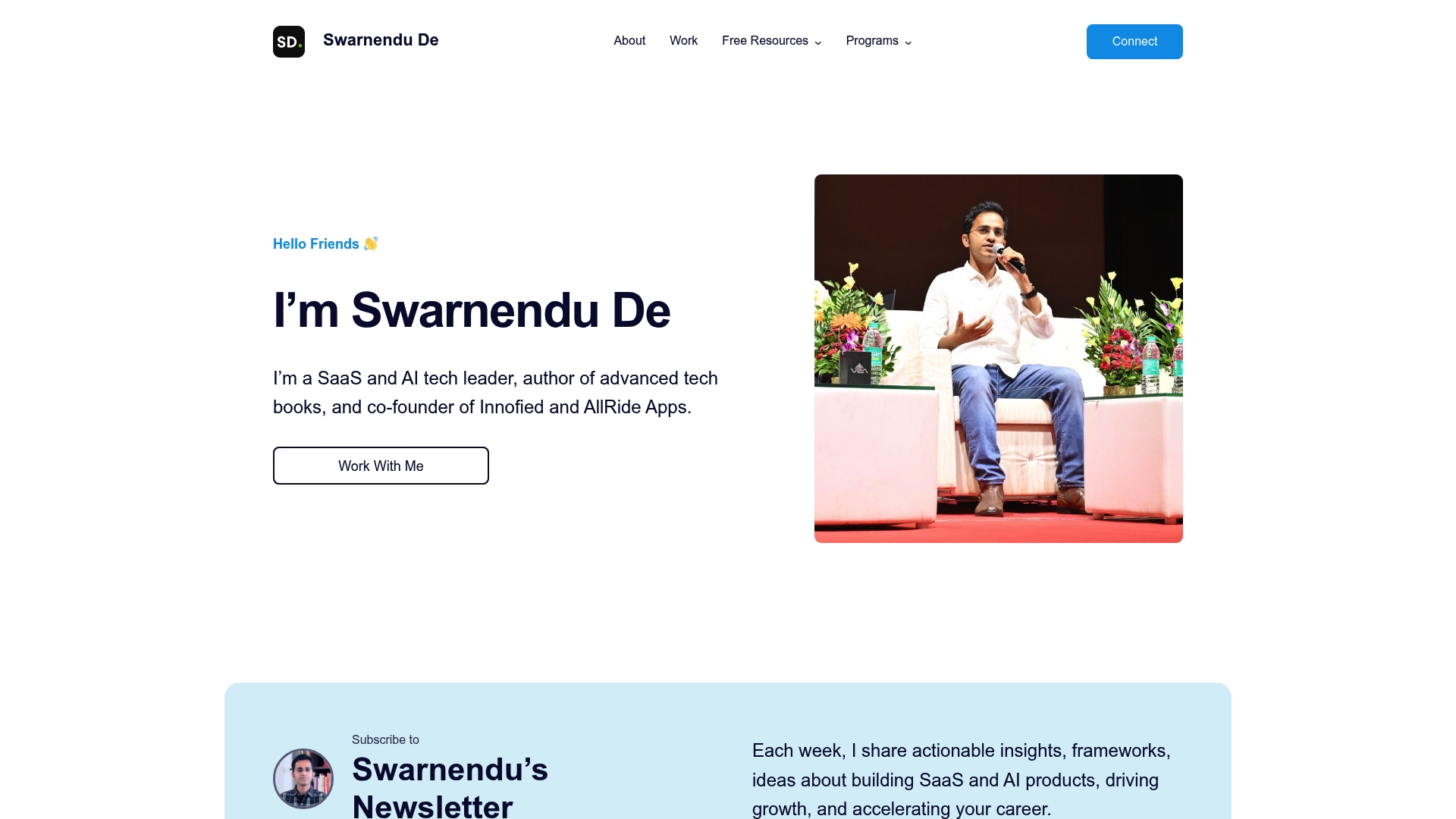
Swarnendu De’s marketing materials state over 200,000 members and students, and the vendor advertises more than 10,000 online students and over 600 delivered products across more than 29 countries. That scale reflects a mix of courses, videos, webinars, and a community newsletter. Many readers find the mix of free content and paid consulting useful for practical product decisions.
Core Features
Swarnendu De publishes a wide library of educational content, including articles, courses, videos, webinars, and a recurring newsletter that target SaaS and AI product building. He also offers consulting and strategic guidance on technical architecture, AI strategy, and product planning while teaching system design and micro SaaS best practices. The portfolio includes named frameworks such as SaaS Product Success Strategy™ and TechBlueprint Framework™, plus an upcoming book on agentic AI for business automation.
Key Differentiator
Provides a structured set of frameworks, classroom-style courses, and long-form content focused specifically on building scalable SaaS and AI products. The offering pairs strategic consulting with repeatable design patterns so product teams can move from concept to an operational architecture with clearer planning steps.
Pros
The content base reflects deep hands-on experience in SaaS and AI product development. That figure for community size shows broad reach for sharing patterns and peer examples. The materials include short videos for tactical topics and longer courses for architecture and planning, which help founders and CTOs learn practical system design. Proprietary frameworks give teams a repeatable language for scoping and technical tradeoffs.
Cons
- Trust rests largely on community reputation and published content; the site does not publish formal case studies or independent audits of consulting outcomes.
Who It’s For
Founders, CTOs, and product leaders who need clear technical guidance and reusable frameworks for scaling SaaS or adding AI workflows will get the most value. You should be comfortable learning from courses and applying frameworks rather than buying a plug-and-play tool.
Unique Value Proposition
SaaS Product Success Strategy™ and TechBlueprint Framework™ provide a repeatable method for architecture and product planning. That method shortens decision cycles by giving concrete templates for system boundaries, data flow, and deployment choices. Teams using those templates can budget fewer exploratory sprints and move into prioritized engineering work faster.
Real World Use Case
A SaaS founder watches a course on clean architecture, adopts the TechBlueprint Framework™ to map services and data ownership, and then hires consulting hours for a two-week technical strategy sprint. The result is a prioritized roadmap and developer acceptance criteria ready for implementation.
Website: https://swarnendu.de
Hechura
At a Glance
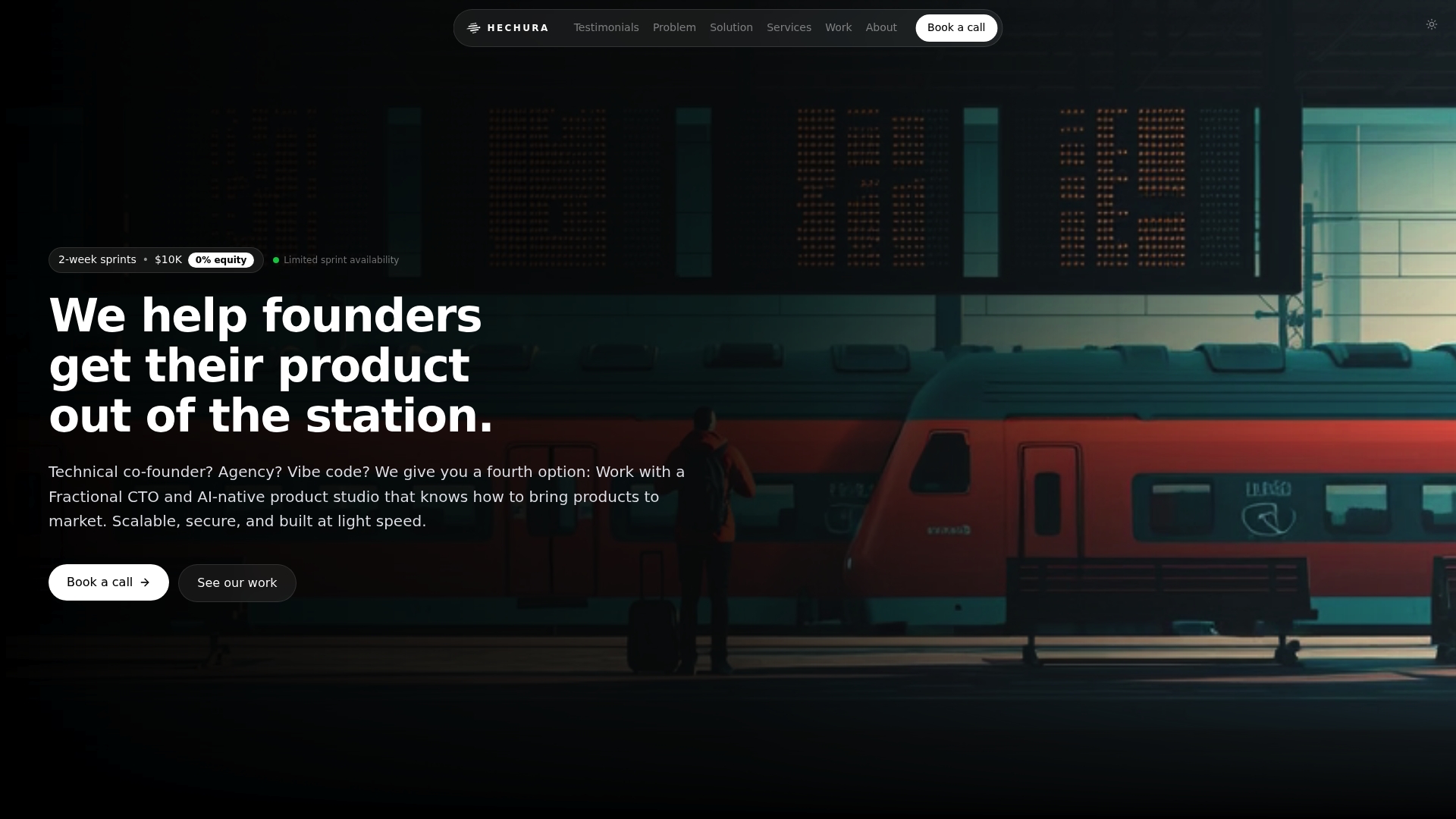
Fixed price sprints run on a two week cadence and cost $10K per sprint. The studio pairs founders directly with senior technical leadership. Clients retain full ownership of code, infrastructure, and intellectual property.
Core Features
Hechura delivers work in fixed price sprints with predictable timelines and clear deliverables. Clients engage a fractional CTO and senior engineers for planning, execution, and roadmap guidance, and they receive full ownership of the resulting code and IP. The team focuses on building AI native systems, automation, and infrastructure that tie back into a product roadmap.
Key Differentiator
The core differentiator is fixed price sprint based delivery combined with direct engagement with senior technical staff. That model turns vague scopes into two week outcomes and removes ongoing vendor ambiguity. The approach suits teams that need an experienced technical lead without taking a permanent co founder.
Pros
Clear sprint structure creates predictable milestones and simplifies planning across fundraising and product cycles. Direct access to senior technical leadership shortens decision loops and reduces architectural rework. Ownership of all developed code and IP eliminates vendor lock in and makes future hiring and handoffs cleaner.
Cons
-
Limited sprint availability may delay start dates for teams with urgent timelines.
-
Higher cost per sprint than many offshore hourly options makes this a heavier upfront investment for cash constrained founders.
-
Not ideal for very early stage founders seeking deep co founder integration or ultra lean MVPs.
When It May Not Fit
If your goal is a near free prototype or a tiny experimental MVP, this model will likely feel too large an investment. If you expect a long term, equity sharing co founder to live inside the company, this service does not replace that relationship. Teams needing many parallel streams of continuous delivery may find limited sprint capacity creates bottlenecks.
Who It’s For
Founders and product teams that need senior technical leadership for short focused bursts of delivery will benefit the most. Startups preparing for market launch or scaling AI features gain from the two week cadence and clear ownership. Teams that prioritize retaining code and IP over the lowest possible upfront cost make the best fit.
Real World Use Case
A startup hired Hechura to build a marketplace MVP across consecutive two week sprints. The team kept the codebase and infrastructure under their control and iterated after each sprint. That process produced deployable releases on a predictable cadence and reduced release uncertainty.
Pricing
Hechura charges $10K per sprint for a two week fixed price engagement. That price positions the studio above common offshore hourly rates and below the cost of sourcing an equivalent senior hire for a short term engagement. Budget conscious teams should compare sprint cost to hiring and time to market.
Website: https://hechura.co
Accipiter Tech

At a Glance
Phased migration workflows include built in rollback strategies and an explicit security by design mandate for enterprise migrations. The approach aims to reduce downtime and limit risk during complex CMS and platform moves. Accipiter Tech pairs migration phases with change management and training to keep teams operational during cutover.
Core Features
Accipiter Tech runs phased migrations that isolate changes and allow rollbacks for content and system components, which reduces exposure during each release. The team layers change management and hands on training into those phases so internal staff can operate the new platform from day one. Microservices development and AI integrations target scalability and personalization using cloud providers such as AWS and GCP and runtimes like Node.js and Python.
Key Differentiator
Accipiter Tech centers its process on a phased migration model combined with built in rollback strategies and a security by design practice. That combination shifts risk to controlled windows and keeps legacy systems available longer during migration. For large enterprises that cannot tolerate broad outages, that operational framing is the core advantage.
Pros
Strong enterprise experience means the team understands complex release gates, compliance checkpoints, and stakeholder coordination across business units. The vendor reports measurable improvements in site performance and SEO after migrations, which matters for commerce and content platforms. Clients get a single vendor for migration, microservices, and AI work, and the structured approach reduces the amount of unplanned downtime during cutover.
Cons
-
Third party reviews report challenges on very complex migrations, which suggests a need for deep technical oversight from the client.
-
Public case study details are limited, so you may need targeted discovery to confirm fit for niche architectures.
-
The service sits at a premium level, which can push total project cost higher than template based migration vendors.
When It May Not Fit
Small to mid market teams without dedicated platform engineers will find the engagement model heavy. Projects that require fully documented public case studies before contracting may struggle because few detailed examples are published. If budget is the primary constraint, fixed low cost migration vendors will likely be a better match.
Who It’s For
IT leaders and digital transformation teams at large enterprises that run mission critical sites and cannot accept extended downtime. Teams that already have cloud architects or platform engineers will extract more value from the migration and microservices work. Useful for organizations planning AI personalization or commerce scale ups alongside the migration.
Real World Use Case
A multinational retailer moved its monolithic CMS to a headless architecture while adding AI driven personalization and new microservices for cart and search. Accipiter Tech staged the migration, trained the retailer’s content teams, and executed rollbacks when integration tests failed. The staged cutover kept the storefront available while the new services entered production.
Pricing
Pricing is not publicly listed. Engagements are treated as custom projects rather than off the shelf plans, with costs that reflect enterprise scale and the level of engineering involvement. Expect vendor discussions to establish scope, timelines, and a proposal based pricing model.
Website: https://accipitertech.io
Product Advisors
At a Glance
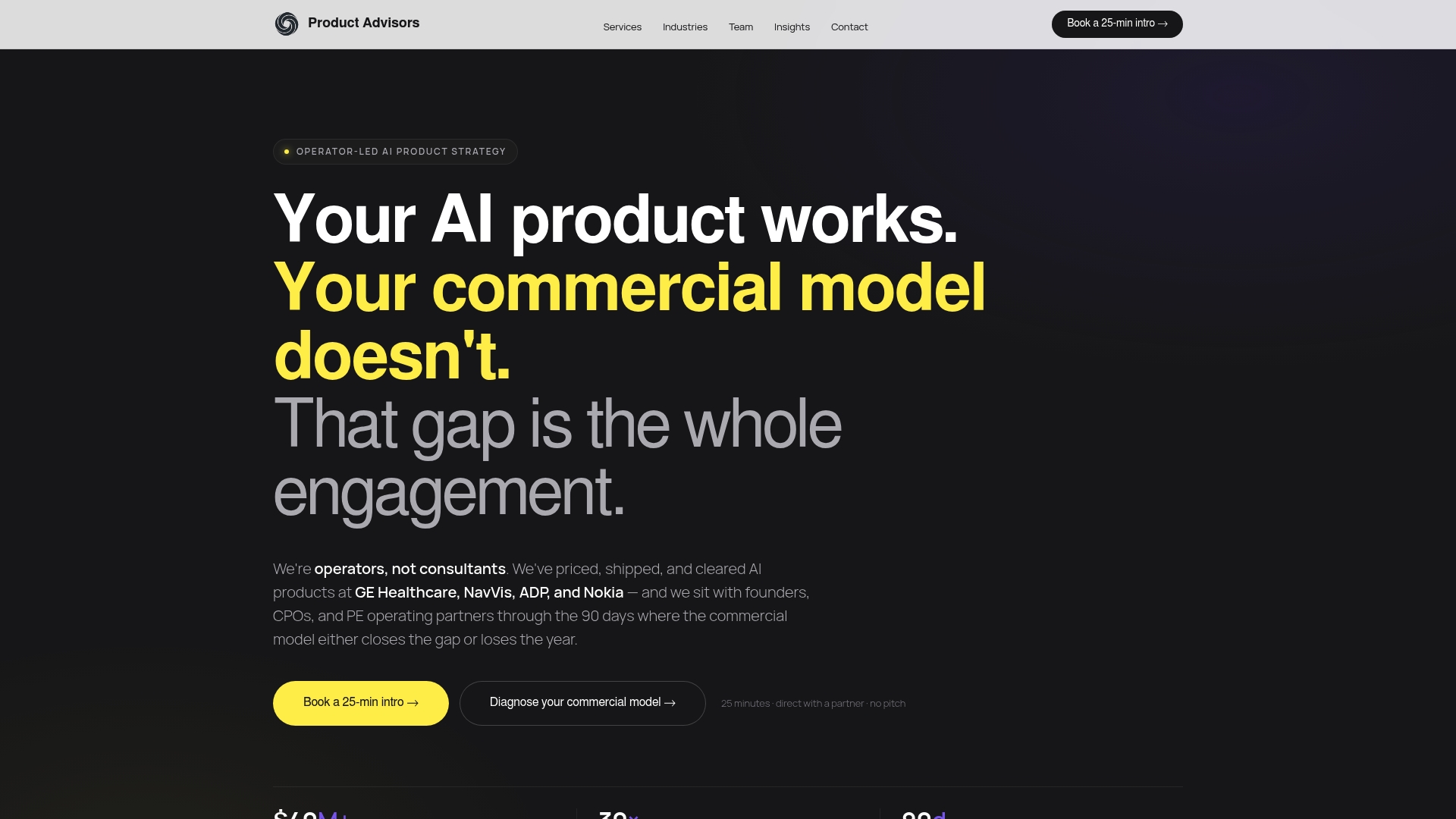
Product Advisors embeds senior operator level leaders directly into client teams and lists work with GE Healthcare, Nokia, and NavVis. Their engagements deliver board ready memos, procurement packages, and leverage models designed for regulated, hardware intensive AI products. The firm focuses on shipping tangible operating and commercial artifacts rather than only producing recommendations.
Core Features
Operator led engagements combine strategy and architecture in the same session to speed decision making and handoffs. Signature frameworks include Company Operating System and Pricing Architecture alongside Physical AI and Regulated AI templates. The offering also places embedded fractional product and technology leadership, and produces decision oriented outputs such as board memos and procurement packages.
Key Differentiator
Product Advisors centers its work on an operator led, shipping focused model that unifies product, regulatory, and commercial strategy inside one embedded team. That approach reduces translation gaps between engineering, compliance, and procurement. It suits projects where a sponsor needs deliverables executives can act on immediately.
Pros
Deep operational experience comes from leaders who have shipped products inside regulated environments, which shortens learning curves for clients. The approach aligns product, regulatory, and commercial strategy into the same set of deliverables, so technical trade offs and compliance requirements surface early. Decision oriented outputs arrive ready for board review and procurement, which helps procurement teams and legal teams move faster. Experience with large enterprises and regulatory pathways gives teams a practical playbook rather than abstract frameworks.
Cons
- Pricing and package details are not listed publicly, so you must request a consult to get cost and scope.
- The focus on regulated and hardware integrated AI means the offering may overdeliver for simple digital SaaS products.
- Several services appear to be in development or highly tailored, which can extend scoping time.
When It May Not Fit
If your product is a plain digital SaaS solution with no regulatory constraint, this approach likely adds unnecessary process and cost. Organizations needing a canned, off the shelf implementation will find the consultative model slow and bespoke. Teams that require rapid, low touch vendor selection rather than embedded leadership should look elsewhere.
Who It’s For
Product Advisors fits regulated industry technology companies and hardware oriented AI builders that need commercial and operating architecture redesign. Typical buyers are healthcare device makers, legal tech vendors, and financial services firms facing compliance requirements. Growth stage teams that must align procurement, pricing, and regulatory pathways will get the most value.
Real World Use Case
A healthcare device manufacturer asked Product Advisors to redesign AI product pricing and compliance architecture to meet EU regulatory requirements and accelerate hospital adoption. The engagement placed a fractional CPO and CTO in the program team and delivered board ready pricing models and procurement-ready documentation. That output shortened vendor evaluation cycles for target hospitals.
Pricing
Pricing is consultative and customized. The vendor lists engagement based models rather than public tiered rates, so teams must request a proposal to obtain scope and pricing details.
Website: https://productadvisors.co
ilim
At a Glance
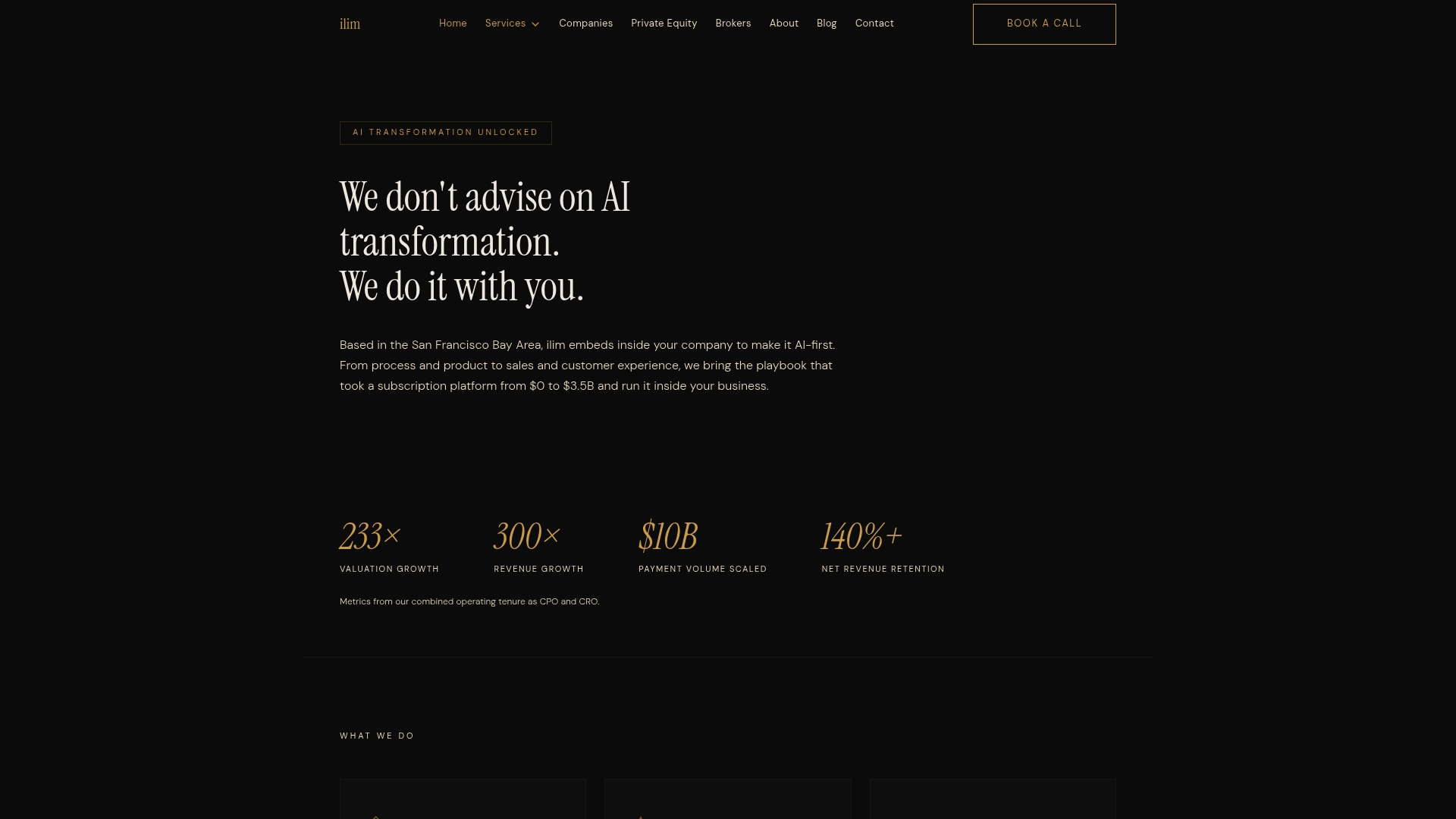
The company reports a 70% reduction in onboarding time after embedding AI into product and support workflows. ilim pairs strategic assessments with hands on implementation to push pilots into steady operations. Clients are typically mid to large SaaS and enterprise firms seeking board level impact from AI.
Core Features
ilim focuses on Embedded AI transformation inside organizations, combining AI strategy, roadmapping, and product and go to market advisory, then linking those plans to hands on implementation of AI agents, knowledge systems, and analytics. The agency also runs organizational capability building and change management programs. Those services aim to move work from pilot to ongoing operations, training internal teams to operate and govern the new systems.
Key Differentiator
The agency emphasizes an operator-led approach to strategic AI integration, drawing on founders who scaled SaaS businesses to large exits. That experience shapes prioritization, governance, and measurable business outcomes rather than purely technical prototyping. The result is advisory that aligns product, revenue, and operations with deployment plans.
Pros
ilim brings deep industry experience and an operator mindset that shortens the path from roadmap to production. The agency bundles strategy, implementation, and change management so teams do not need separate vendors for technical builds and organizational adoption. Engagement models are tailored to readiness and goals, which helps match scope to internal capability and reduces the risk of abandoned pilots.
Cons
- Limited public detail on the specific AI platforms or vendor stacks ilim uses, which makes technical due diligence slower.
- Full transformation programs are likely expensive, and smaller organizations may find the engagement model cost prohibitive.
- The practice centers on SaaS and enterprise use cases, so B2C product teams or very small businesses may not receive the same depth of domain expertise.
When It May Not Fit
If your organization lacks a senior sponsor or the budget required for a multiquarter transformation, ilim is unlikely to be a good match. The agency prioritizes mid and large SaaS or enterprise clients; teams focused on consumer mobile products or solo founders will probably find the engagement scope misaligned. Firms needing a low cost, off the shelf automation tool should look elsewhere.
Who It’s For
Mid to large sized SaaS companies, private equity portfolio firms, and professional services organizations that want hands on support integrating AI into products and operations. Ideal buyers have executive buy in and a willingness to fund multi phase programs that include change management and internal training.
Real World Use Case
A SaaS vendor worked with ilim to embed AI into its product roadmap and automate onboarding and support. The vendor reports the 70% reduction in onboarding time referenced above and noted material ongoing cost savings. ilim led the roadmap, built agents and knowledge systems, and trained the product and support teams to own the outcomes.
Pricing
Pricing is not listed publicly. ilim describes scope based, custom engagements that vary by program length and ambition, so expect proposals to reflect discovery outputs and required deliverables.
Website: https://ilim.ai
Comparison of alternatives
Exploring the landscape of companies providing AI and SaaS development consulting services reveals differing approaches tailored to specific operational needs. This section compares Swarnendu De, Hechura, Accipiter Tech, Product Advisors, and ilim, highlighting key tradeoffs and scenarios for selecting each service.
Educational resources versus operational focus
Swarnendu De stands apart for its extensive educational resources such as courses and frameworks like the TechBlueprint Framework™. This content supports SaaS and AI developers in building scalable solutions through structured learning. While Hechura offers rapid sprint development and code ownership, it does not provide the same depth of reusable educational assets, making Swarnendu De ideal for teams framing their own strategies and systems.
Engagement cost and timeline predictability
If budget and deliverable timelines are primary factors, Hechura’s fixed-price sprint methodology simplifies planning with its clear, upfront costs of $10,000 per sprint. By contrast, both Swarnendu De and others like ilim and Product Advisors rely on custom consultations, which require thorough discussions to estimate costs and timelines, making Hechura the choice for straightforward engagements.
Best fit
- Seeking structured learning resources paired with proven SaaS frameworks should consider Swarnendu De to benefit from its mix of educational platforms and operational playbooks.
- Needing clear sprint expectations coupled with senior technical developers should evaluate Hechura for its fixed-priced engagements and two-week delivery cycles.
- Requiring staged enterprise-grade platform migrations with full rollback strategies should rely on Accipiter Tech for its meticulous attention to mitigation of risks and dependencies.
- Teams emphasizing AI solutions tightly integrated into operations and improved organizational readiness would find ilim’s expertise in transformation programs.
Our pick
Swarnendu De excels for teams needing not just surface-level advice but educational depth and proven templates backing a learning library. However, teams seeking immediate, predictable execution over extended planning or resource development may find Hechura more suitable for their projects.
Swarnendu offers a comprehensive library of resources and frameworks tailored for SaaS and AI product development.
| Product | Core Feature | Key Differentiator | Best For | Pricing | Notable Limitation |
|---|---|---|---|---|---|
| Swarnendu | Educational content, consulting, proprietary frameworks | Structured methods for SaaS and AI product design | Founders and CTOs | Price not published | Relies on reputation |
| Hechura | Fixed price sprints for development | Sprint-based planning and execution | Startups preparing for market launch | $10K per sprint | High upfront cost |
| Accipiter Tech | Phased migration workflows | Rollback strategies and security by design | Large IT, digital transformation teams | Price not published | Few public case studies |
| Product Advisors | Embedded product and tech leadership | Operator-led model for regulated AI industries | Growth-stage hardware-involved technologies | Price not published | May overdeliver for SaaS |
| ilim | AI strategy and implementation | Operator-led transformation | Mid to large SaaS and enterprise firms | Price not published | Cost prohibitive for small firms |
What Challenges Do SaaS Founders Face When Automating Workflows?
Workflow automation software aims to cut complexity and speed up product delivery, but transitioning from concepts to live systems remains difficult. SaaS founders and product teams often struggle to scope projects clearly and manage technical tradeoffs. Swarnendu addresses these challenges with the SaaS Product Success Strategy™ and TechBlueprint Framework™. These frameworks break down system architecture into repeatable patterns, helping teams reduce exploratory work and move directly to build.
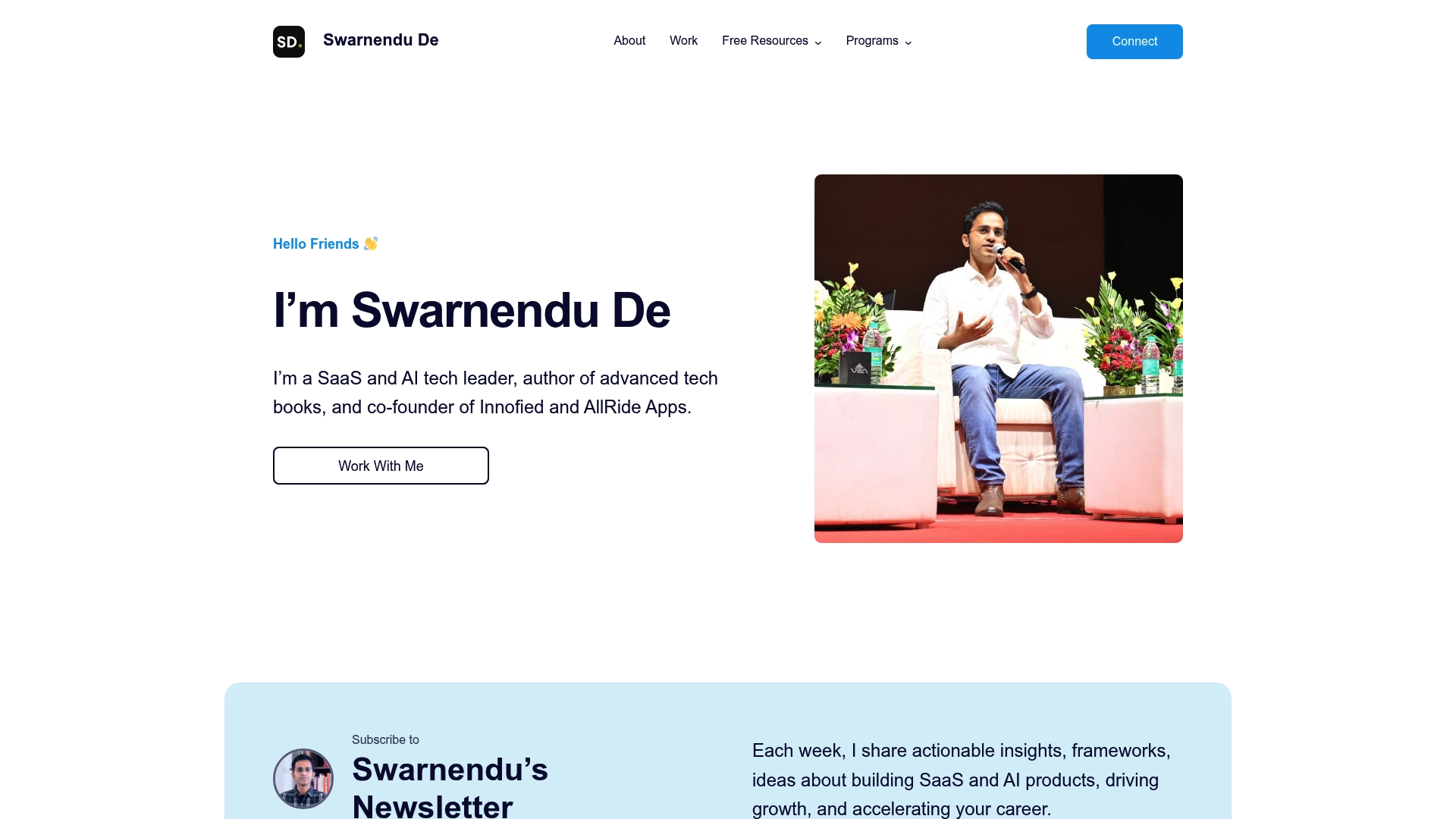
Explore how Swarnendu’s approach paired with extensive courses and community insights helps you design and implement scalable AI-powered workflows efficiently. Visit Swarnendu to access expert guidance and resources that shorten development timelines and clarify technical planning decisions.
FAQ
How does Swarnendu help teams in AI product development?
Swarnendu offers extensive educational content, including courses and consulting focused on SaaS and AI product building. The wide library of articles, videos, and frameworks from Swarnendu provides practical guidance, enabling teams to navigate technical architecture and product planning effectively.
What is the difference between Hechura and Swarnendu?
Hechura specializes in delivering fixed-price sprints with senior technical leadership directly engaged in the process. In contrast, Swarnendu provides a broader range of educational materials and consulting services specifically for building scalable SaaS and AI products, making it better suited for those looking for foundational knowledge and repeatable frameworks.
Can I use Swarnendu if I need hands-on technical leadership?
Swarnendu focuses on providing educational resources and strategic consulting rather than direct technical leadership in implementation projects. If hands-on guidance is essential for your team, consider agencies like Hechura that offer engaging technical staff for immediate developments.
Which platform provides repeatable frameworks for SaaS development?
Swarnendu’s proprietary frameworks, such as the SaaS Product Success Strategy™ and TechBlueprint Framework™, offer repeatable methods for architecture and product planning. These frameworks help teams reduce decision cycles and move into prioritized engineering work faster.
What is the expected investment level for using Swarnendu’s services?
Engagement with Swarnendu varies in pricing depending on the selected consulting services, but it’s essential to assess the costs relative to the depth of educational content and strategic guidance that your team is likely to receive.